
by Bob Archer | Sep 25, 2026 | Blog
There’s some interesting news to look back on this past week in the KMB Communications Technology Week in Review.
The news we’ll be looking at includes the continuing resurgence of physical media with a post from eCoustics, as well as Residential Systems’ deep dive into the topic of home theater. Other news items in this week’s roundup include Fender introduces home audio speakers; Samsung to cut QLED production, and the tech week in review will have news on the Paramount merger with Warner Bros.
- Black Sabbath and Paranoid Return on 15 IPS Reel-to-Reel as Ozzy Osbourne’s Legacy Endures
- Home Theater Week: Unlocking Professional Audio Precision
- Fender Audio Hits U.S. Retail with ELIE Speakers and MIX Modular Headphones
- Samsung to Reportedly Drastically Cut QLED Production
- Why AV over IP Needs a Security Rethink
- Paramount Settles Antitrust Lawsuit, Clearing Path for WBD Merger
KMB Communications Residential Technology News
Music and home audio has been surging over the past couple years and most notably vinyl. More recently, data from the Recording Industry Association of America (RIAA) indicates that CD sales are rising. Jumping on the rise of physical media, eCoustics is reporting that Rhino Records is releasing a reel-to-reel version of the classic Black Sabbath album, “Paranoid.”
The story says the release will be on 15-inch-per-second (IPS) half-track, quarter-inch tape, and the release will be limited to 500 copies for $300.
Getting the most from consumer media, Residential Systems is in the midst of its home theater week, and to support the best possible playback of home AV content, the magazine published a story on how integrators can improve the quality of their installations by manually calibrating their AV jobs.
The story features the long-time smart home industry educator Gerry Lemay, and it examines the latest methods recommended by the Home Acoustics Alliance (HAA).
Fender, a brand known for the Stratocaster and Telecaster guitars, and Deluxe Reverb amplifier, is entering the consumer home audio market with the release of its ELIE speakers and MIX headphones.
AV Nirvana is reporting the products are designed for a variety of lifestyle applications: The ELIE is a pair of portable speakers that serve as Bluetooth speakers and compact speakers. The MIX headphones are a modular solution designed to provide long battery life, with a choice of multiple wireless settings, and active noise cancelling options.
The final KMB Communications residential technology news item for the week is a story from Sound & Video Contractor (SVConline) on Samsung’s QLED TV production.
The story from SVConline points out Samsung introduced QLED back in 2017, and due to slowing sales, the company is set to move on from the technology. Citing a report from the Korean news site ETNews, production will be reduced from 10-million units to 2- to 3-million units. ETNews speculates that production of QLED could be cut entirely by 2028, and the cuts, the story adds will allow Samsung to dedicate those resources to technologies such as OLED and MicroLED.
National Technology News Roundup
The social media website LinkedIn earlier in the week posted on the latest developments with the Paramount attempt to merge with Warner Bros. Discovery (WBD).
LinkedIn states that Paramount has settled with the attorney generals of several states to facilitate its acquisition of WBD. The website notes the five-year deal with these attorney generals includes a $1.5 billion investment in domestic film production, and for the release of 30 movies per year in the commercial cinema industry.
Putting a bow on the KMB Communications Technology Week in Review for the week of September 21-25 is a column that appeared on the Systems Contractor News (SCN) website.
The column by Ayham Ereksousi, senior director of product, NETGEAR Enterprise, says that for the past decade he’s recommended taking steps to protect the security of AV-over-IP networks.
In the column he warns the AV industry that if the proper steps aren’t taken with these infrastructure systems, the market is risking far more than just the use of outdated equipment—it risks exposing clients to operational disruption and far worse.
Ereksousi closes the column with this: “The networks we deploy are no longer isolated. They never will be again. The opportunity is to make security a core part of every AV deployment, and a defining part of the value we deliver.”
To learn more about KMB Communications clients, click here.

by Bob Archer | Sep 23, 2026 | D-Tools, News
For Immediate Release
Download Image here
D-Tools Cloud Wins Residential Systems Best of Show Award at CEDIA Expo 2026
Industry recognition underscores D-Tools Cloud’s continued evolution as a comprehensive platform helping integrators work more efficiently and profitably.
RENO, Nevada — September 2026 — D-Tools, the Integration Business Platform for the technology integration industry, announces that D-Tools Cloud has received a Residential Systems Best of Show Award at CEDIA Expo 2026, recognizing the platform’s continued innovation and growing role in helping systems integration companies manage their businesses more efficiently and profitably.
The award follows a significant CEDIA Expo for D-Tools, where the company demonstrated the largest collection of new D-Tools Cloud capabilities in its history. The latest advancements span AI-assisted workflows, inventory and asset management, accounting integration, sales reporting, project documentation and other tools designed to reduce the time and margin that can be lost between the sales conversation, warehouse, jobsite and back office.
“Winning a Residential Systems Best of Show Award is especially gratifying because D-Tools Cloud is built around the real-world needs of the integration community,” says G Paul Hess, CEO at D-Tools. “Our goal is to remove friction from every stage of the project lifecycle and give integrators the information and tools they need to make better decisions, work more efficiently and protect their margins. This recognition validates the tremendous work our team has put into making D-Tools Cloud an even more powerful platform for running an integration business.”
Among the advancements showcased at CEDIA Expo were new AI Assisted Workflows, including Quote Assist and Ask D-Tools; Inventory & Asset Management in the D-Tools Cloud Mobile App; and a new MCP Server that enables integrators to connect their D-Tools Cloud data with AI assistants from Anthropic and OpenAI. D-Tools also previewed two-way QuickBooks Online synchronization and AI Proposal Templates.
“D-Tools Cloud continues to evolve in ways that address the real business challenges residential integrators face every day,” says Tony Savona, editor of Residential Systems. “The platform brings together the tools integrators need to manage projects and their businesses more efficiently, while continuing to introduce new capabilities that can have a meaningful impact on productivity and profitability. We’re pleased to recognize D-Tools Cloud with a Residential Systems Best of Show Award at CEDIA Expo 2026.”
The Residential Systems Best of Show Award adds to the industry recognition for D-Tools’ portfolio of business management solutions. D-Tools Cloud supports integrators across sales, design, project management and service operations, helping companies maintain greater visibility and control throughout the project lifecycle.
For more information, visit www.d-tools.com.
About D-Tools, Inc.
D-Tools, Inc. is the Integration Business Platform for the technology integration industry. Its award-winning System Integrator (SI) and D-Tools Cloud solutions support sales, design, project management and service operations for thousands of companies across 90-plus countries. For more than 27 years, D-Tools has helped integrators build more efficient, more profitable businesses.
MEDIA CONTACTS
Tim Bigoness, D-Tools – (925) 270-4102 – timb@d-tools.com
Katye McGregor Bennett, KMB Communications – (406) 446-1283 – katye@kmbcomm.com

by Bob Archer | Sep 23, 2026 | News, Wall-Smart
FOR IMMEDIATE RELEASE | DOWNLOAD IMAGE HERE
WALL-SMART Universal Access Point Mount Inducted into CEDIA Product Hall of Fame; Universal Dome Camera Mount Earns Performance Home Award
Recognition at CEDIA Expo 2026 celebrates WALL-SMART’s approach to universal, design-friendly mounting solutions that simplify installation while preserving technology performance and architectural aesthetics.
DENVER, COLORADO — September 2026 — WALL-SMART, the leading designer and manufacturer of custom flush ceiling and wall mounts for smart home devices, celebrated two significant industry honors at CEDIA Expo 2026, led by the induction of its Universal Access Point Mount into the CEDIA Product Hall of Fame at the 2026 CEDIA Smart Home Awards Americas. WALL-SMART was also honored with a Performance Home Award from Technology Designer for its new Universal Flush Mount for Dome Cameras.
The CEDIA Product Hall of Fame recognizes groundbreaking products that have significantly enriched the integrated technology industry and provided lasting benefits to the custom installation community. The induction of WALL-SMART’s Universal Access Point Mount recognizes a product that addresses a persistent challenge in luxury smart homes: providing the robust wireless networking homeowners expect without allowing access points to visually interfere with carefully designed interiors.
“We are incredibly honored to have the Universal Access Point Mount inducted into the CEDIA Product Hall of Fame,” says WALL-SMART Co-CEO Galia Ben-Dor. “This is one of our industry’s most prestigious honors, and to have a WALL-SMART product recognized for its lasting impact is especially meaningful. It validates the philosophy that has guided us from the beginning: technology should deliver exceptional performance without imposing on the design of a space. Our goal has always been to make the technology virtually disappear into the architecture, and this recognition from CEDIA reinforces the value of that approach for integrators, designers and homeowners alike.”
Rather than mounting a wireless access point visibly to a wall or ceiling, WALL-SMART’s Universal Access Point Mount recesses the device and covers it with a paintable finish that blends seamlessly into the surrounding architecture. Its universal design accommodates access points from multiple leading enterprise and smart home networking brands, including Netgear, Araknis, Ruckus, Ubiquiti, Savant and PoEWit.
For integrators, this multi-brand compatibility means greater flexibility when specifying, installing and servicing networking systems without requiring a different enclosure for every manufacturer or model. At the same time, the mount is engineered to maintain the ventilation requirements of high-performance networks, helping preserve equipment performance while keeping the hardware discreetly out of sight.
WALL-SMART’s commitment to universal mounting solutions was further recognized at CEDIA Expo when Technology Designer presented the company with a Performance Home Award for its Universal Flush Mount for Dome Cameras. Introduced at CEDIA Expo 2026, the Universal Flush Mount for Dome Cameras brings the same universal-fit philosophy to another increasingly important smart home category: security. Designed to accommodate a wide variety of dome surveillance cameras, the single-platform solution supports multiple camera body sizes as well as two-, three- and four-hole mounting configurations. This gives integrators greater freedom to select or change camera brands and models without requiring a different mounting solution for each device.
For more information about WALL-SMART and its portfolio of architecturally integrated mounting solutions, visit wall-smart.com.
About WALL-SMART Ltd.
WALL-SMART is the leading designer and manufacturer of custom flush ceiling and wall mounts for smart home devices, including tablets, touchscreens, Wi-Fi access points, security cameras, voice assistants and more. Dedicated to providing cutting-edge concealment solutions for technology in new and existing homes, WALL-SMART inspires homes that are both technologically advanced and exceptionally beautiful. A wide range of products, combined with simple installation and worldwide shipping, positions WALL-SMART as a valuable smart home resource for home systems integrators, home builders and contractors, architects and designers.
For more information about WALL-SMART, please find and follow us on Facebook, Twitter, Instagram, and LinkedIn.
Media Contact
For interviews, reviews, or more information, please contact Katye (McGregor) Bennett of KMB Communications by phoning (425) 328-8640 or emailing katye@kmbcomm.com.
All products, product names, trademarks, and registrations mentioned are the property of their respective owners, all rights reserved.
by Bob Archer | Sep 23, 2026 | Apex Technologies, News
FOR IMMEDIATE RELEASE | DOWNLOAD IMAGES HERE
Apex Technologies Celebrates Dual Product Honors at CEDIA Expo 2026
GUDE Systems Expert Power Control and Future Automation Projector Concealment Solution earn recognition from CE Pro and Technology Designer, underscoring Apex’s commitment to technologies that improve system performance, simplify integration and elevate the luxury home experience.
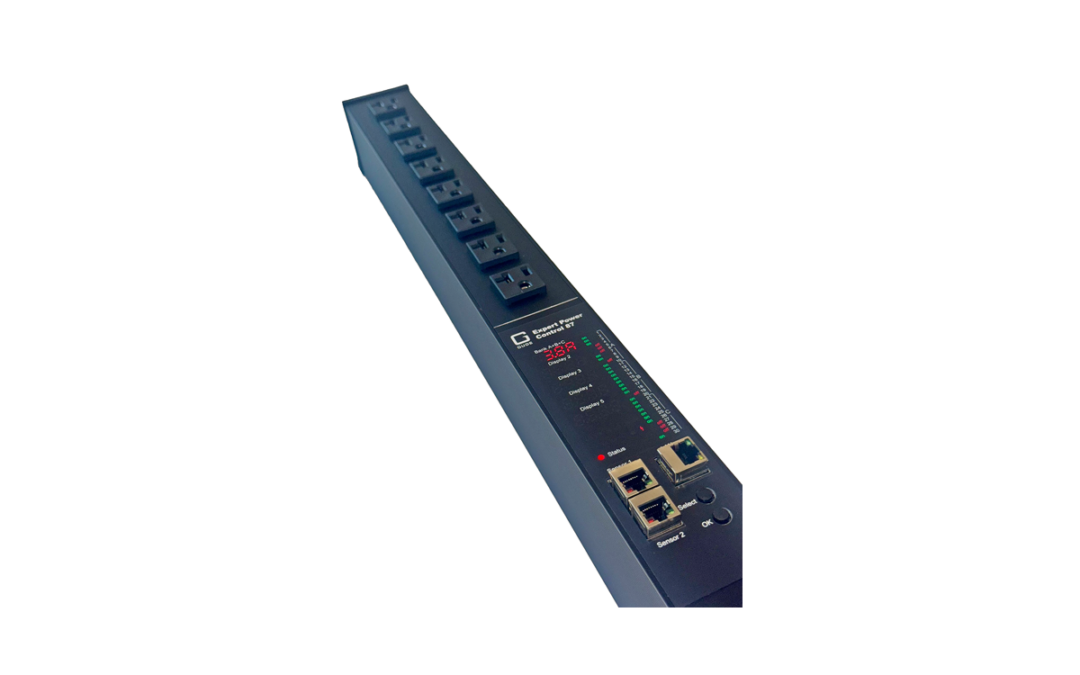
DENVER, COLORADO — September 2026 — Apex Technologies is celebrating two major industry honors presented during CEDIA Expo 2026, with products exclusively distributed by Apex in the U.S. earning recognition from leading systems integration publications, CE Pro and Technology Designer. The GUDE Systems Expert Power Control 8290-1 received a CE Pro BEST Award, while the Future Automation PCV-F Projector Concealment Solution earned a Technology Designer Performance Home Award.
Together, the honors recognize two distinct but complementary areas of Apex Technologies’ portfolio: intelligent infrastructure that improves the reliability and manageability of sophisticated technology systems, and innovative mechanical engineering that enables high-performance entertainment technology to integrate beautifully into luxury interiors.
“These awards are especially meaningful because they recognize the kind of innovation we look for when bringing products into the Apex portfolio,” says Ryan Donaher, owner of Apex Technologies. “Whether it’s making critical technology infrastructure smarter and easier to manage or finding an ingenious way to deliver reference-quality cinema without compromising the architecture of a room, we want to give integrators solutions that solve real challenges. We’re proud to represent GUDE Systems and Future Automation and thrilled to see both recognized by respected industry authorities.”
CE Pro BEST Award Recognizes Intelligent Power Management from GUDE Systems
The award-winning GUDE Systems Expert Power Control advances the traditional role of the PDU by combining intelligent power distribution with remote diagnostics, energy monitoring, environmental sensing and automated fault recovery. Designed to improve system reliability and simplify long-term service, the platform provides individually controllable outlets along with integrated metering, programmable automation routines and advanced remote management. Built-in watchdog functionality can automatically reboot unresponsive equipment, while remote troubleshooting capabilities give technicians an opportunity to resolve issues without an onsite service call.
“Every year, it is both a privilege and a genuine challenge to judge the CE Pro BEST Awards. The entries represent some of the most innovative products our industry has to offer, and the 2026 winners demonstrate a clear understanding of where the smart home market is headed,” says CE Pro executive editor Zach Comeau. “Power management is becoming an increasingly important category as residential technology systems grow more sophisticated, connected and dependent on reliable infrastructure. Apex Technologies’ award-winning GUDE Systems solution stands out for addressing that need with intelligent monitoring, remote management and automation capabilities that help integrators improve system reliability, reduce service demands and deliver a better long-term experience for their clients.”
Future Automation PCV-F Earns Technology Designer Performance Home Award
Apex Technologies also celebrates a Technology Designer Performance Home Award for the Future Automation PCV-F Projector Concealment Solution, an innovative system designed to solve one of luxury home cinema’s most persistent design challenges: delivering large-format projection without allowing the projector itself to compromise the room’s architecture.
The PCV-F installs a projector vertically within a wall cavity and uses a precision front-surface mirror assembly to direct the projected image into the room. The approach completely conceals the projector and its mounting hardware while maintaining the image quality and precision expected from a high-performance cinema.
Capable of supporting projectors weighing up to 60 kg (132 pounds), the PCV-F incorporates vibration-isolated mounting, adjustable projector positioning and precision mirror geometry with tilt adjustment from 35 to 55 degrees. A dual-pane Schott CONTURAN® Magic anti-reflective glass system minimizes reflections and optical distortion, while compatibility with contemporary laser projectors and throw ratios down to 1.1 expands its usefulness in sophisticated residential cinema environments.
For more information about Apex Technologies and its portfolio of premium power management and home cinema solutions, visit apex-tech.us.
About Apex Technologies
Founded in 2020, Apex Technologies distributes cutting-edge audio-video and power management products from manufacturers at the highest end of the market. Brands include Meridian Audio, TPI Aerospace, Bel Air Cinema, ProtoPixel, 360 Power Quality, Innovolt, GUDE Systems and HDANYWHERE. Apex works tirelessly behind the scenes from project conception through installation and beyond to ensure that its partners can go about their business with ease. Visit apex-tech.us to learn more.
Media Contact
Katye (McGregor) Bennett
KMB Communications
(425) 328-8640
katye@kmbcomm.com
by Bob Archer | Sep 23, 2026 | Blog, KMB Communications
After spending a week in Denver for CEDIA Expo 2026 and talking with technology integrators, manufacturers, builders and other professionals working across the residential market, one thing became abundantly clear: The conversation around home technology is maturing.
It’s becoming less about the latest shiny object and much more about infrastructure, reliability, performance, and how well all this stuff actually works together once the homeowner moves in.
That matters for custom builders. CEDIA’s new research estimates the U.S. professional residential technology market at $33.8 billion, with home networking alone accounting for 15% of the market. Meanwhile, NAHB reports that 52% of builders expect artificial intelligence to positively affect housing and the industry over the next decade, while 61% identify energy costs as a long-term concern.
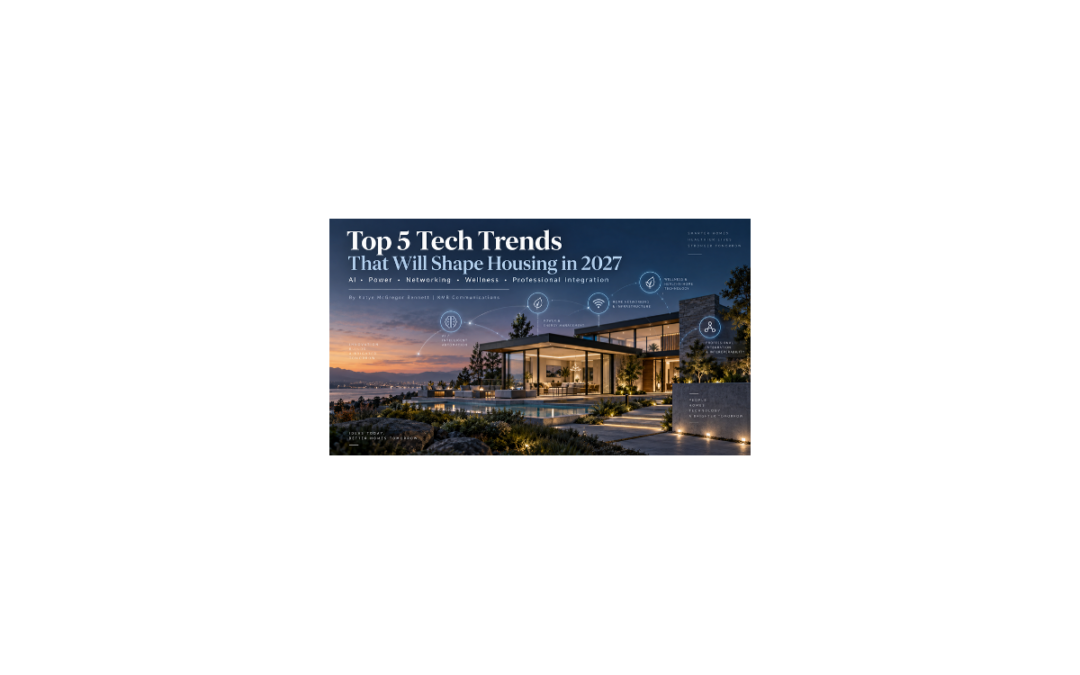
So, looking ahead to 2027, here are five home technology trends I believe deserve builders’ attention:
1. AI Will Fade into the Background
This is actually a good thing. The most valuable AI in a home probably won’t require homeowners to think about AI at all. It will help systems anticipate needs, simplify routines, identify issues, and operate more efficiently. CEDIA Expo’s 2026 education program included roughly 20 sessions specifically focused on AI, with an emphasis on practical applications and predictive smart-home technologies.
The builder takeaway? Don’t try to predict the next AI gadget. Create the infrastructure and project coordination that allow the home to evolve.
2. Power Moves into the Planning Conversation
More of the home depends on electricity than ever before. Everything in the home from climate systems and lighting to networks, security, EV charging and automation all require power.
The problem is that reliability isn’t guaranteed. U.S. electricity customers averaged 11 hours of interruptions in 2024, nearly twice the annual average of the preceding decade, according to the U.S. Energy Information Administration. Telehealth, home healthcare, living in place, and an aging population needing in-home care are gaining more awareness and compounding the impact of poor power quality and reliability rapidly. In addition, homes are more commonly featuring EV charging, battery storage, solar, automation, and more electrically dependent systems.
Therefore, expect greater attention to power quality and reliability, electrical capacity, backup power, load management, surge protection, and energy monitoring earlier in the building process.
3. The Network Becomes Home Infrastructure
Wireless does not mean infrastructure-free. I will happily keep saying this until everyone stops looking surprised. A high-performance connected home depends on a properly designed network, wired backbone, thoughtfully placed access points, carefully chosen equipment locations, and pathways that allow the system to change over time.
The Home Technology Association (HTA) makes a related point in its space-planning guidance for residential technology: Equipment rooms require more than enough space for a rack. Electrical circuits, ventilation or cooling, structured cable pathways, network distribution, and future service access all need to be considered during design.
In other words, the network is no longer merely supporting the technology. Increasingly, the network—and the infrastructure around it—are part of the home itself.
4. Wellness Gets More Measurable
Healthy-home conversations are also becoming more tangible. The EPA reports that people spend about 90% of their time indoors, where some pollutant levels may be several times higher than outside.
Indoor-air-quality sensors, ventilation, filtration, humidity control, intelligent lighting, and automated shading give builders and homeowners more ways to monitor—and increasingly respond to the indoor environment.
5. Professional Integration Matters More
Wrapping up this list of home technology trends is professional integration. As the number of connected systems increases, successful projects depend less on any single product and more on how everything works together.
CEDIA recommends selecting smart-home ecosystems based on project and client needs rather than assuming there is one universally “best” platform. Professional systems can integrate lighting, climate, security, entertainment, and other technologies while supporting scalability, updates, and ongoing service.
Emerging standards such as Matter are worth watching, but in sophisticated custom homes, proven system architecture, a robust network and experienced technology integration remain the foundation.
Just as important is when that expertise enters the project. HTA’s Project Technology Assessment guidance for builders and construction professionals recommends determining the client’s technology needs before framing, electrical, and HVAC bids are obtained so the integrator’s electrical, cooling, and framing requirements can be incorporated accurately—helping reduce change orders and delays.
That may be the most important home technology trend of all.
The future isn’t necessarily about putting more technology into homes. It’s about planning technology more effectively.
On October 1 at 3:00 p.m. ET, I’ll moderate NAHB’s “What’s Next in Home Technology: Insights from the 2026 CEDIA Expo” webinar with custom builder Greg Hardwick and residential technology experts Bret Jacob and Sean Weiner. We’ll dig into what builders and remodelers should know now about the technologies shaping the homes they’ll be delivering next.
Because the easiest time to plan for tomorrow’s technology is still before somebody installs the drywall.
Katye McGregor Bennett is the CEO and Founder of KMB Communications. To learn more about these trends or to simply ask a question, email Katye at katye@kmbcomm.com


