by Bob Archer | Aug 12, 2026 | Kordz, News
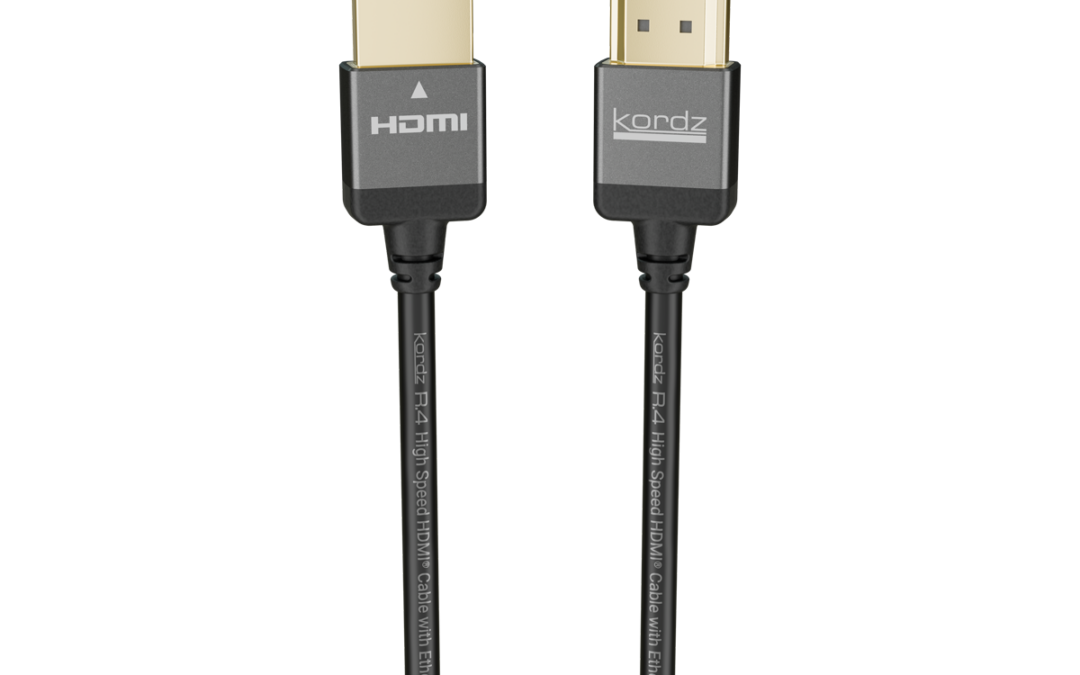
August 12, 2026 — Kordz, a global leader in professional-grade AV connectivity, will showcase its R.4 48Gbps Rack and Marine Passive HDMI Cable at CEDIA Expo 2026, September 1-4, in Denver, Colo. Engineered specifically for mission-critical rack and marine applications, the R.4 represents the latest evolution of the company’s high-performance, installation-friendly HDMI portfolio.
Built as the successor to Kordz’ popular R.3 18Gbps HDMI Cable, the R.4 supports the full 48Gbps data rate, enabling transmission of uncompressed 8K video and the complete HDMI 2.1 feature set, including eARC, VRR, and QMS. Designed for environments where failure is not an option, it incorporates significant advances in shielding, mechanical stability, cable construction, and safety compliance. Every cable is also independently performance-tested and certified to the DPL Labs Enhanced 48Gbps Reference Standard, and comes backed by the Kordz lifetime warranty, ensuring reliable interoperability across real-world HDMI systems.
“The R.4 is purpose-built for integrators who require absolute confidence in critical HDMI infrastructure,” says Kordz Managing Director, James Chen. “It reflects a focused engineering approach to real installation challenges, such as mechanical stability, EMI control, airflow, and compliance, while ensuring systems remain future-ready.”
For rack installations, the R.4 features a compact die-cast connector assembly, a slimmer cable diameter, and 0.3-meter (1ft) length increments from 0.3m (1ft) to 3.0m(9’10”), supporting clean cable management, improved airflow, and efficient routing in high-density equipment racks. A full-metal internal connector housing combined with a class-leading 95% coverage copper braid over a 125% coverage foil shield provides exceptional EMI rejection, helping maintain signal integrity in electrically noisy environments.
Marine installations benefit from a secure 2kg retention HDMI connector designed to withstand constant vibration and movement, along with a full LSZH cable construction that meets IEC60332, IEC60754, and IEC61034 requirements for low-smoke, zero-halogen performance. These features make the R.4 ideally suited for marine and other compliance-driven installations where enhanced fire safety and long-term reliability are essential.
Demonstrating the Strength of High-Quality Cabling
The R.4 is just one example of Kordz’ commitment to engineering cabling solutions that combine installation-friendly design with uncompromising performance. At CEDIA Expo, attendees can also experience this philosophy in action with Kordz’ popular “Cables that hold their own” demonstration. Kordz displays the 20kg pull strength of its PRO4 Active Optical HDMI Cable by using it to suspend a full box of Cat6 cable while simultaneously powering a live TV. Despite its ultra-slim 4.7mm diameter, PRO4 delivers 48Gbps uncompressed bandwidth up to 100 metres and is certified to the DPL Labs Enhanced 48G Reference Standard, proving that integrators can have it all in one cable: strength, flexibility, and performance.
Where to See Kordz at ISE 2026
The Kordz R.4 48Gbps Rack and Marine Passive HDMI Cable and PRO4 Active Optical HDMI Cable will be showcased at CEDIA Expo 2026, Booth #3032, and are available now. For more product information and to find your nearest distributor, visit www.kordz.com.
About Kordz
Kordz is the connectivity brand for integrators, by integrators. A multi-award-winning global industry leader in professional-grade connectivity products, Kordz’ team of seasoned former integrators is on a mission to ‘Kordzify’ and optimise technology for professionals by designing, engineering and manufacturing products that deliver ease and profitability through a seamless installation experience with high-performance results that today’s tech-savvy end-users expect. With a wide range of robust, fast and effective solutions backed by expert technical support, Kordz helps integrators around the world meet the evolving cabling requirements of a diverse range of residential and commercial environments. For more information about Kordz, please visit kordz.com and follow the company @kordzglobal on LinkedIn, X, Facebook, Instagram and YouTube.
Media Contact
For interviews, reviews, and more information, please contact Katye (McGregor) Bennett of KMB Communications at (406) 446-1238 or katye@kmbcomm.com

by Bob Archer | Aug 10, 2026 | Blog, KMB Communications
Denver, home of the NFL’s Broncos, the NHL’s Avalanche, and the folk-rock band, the Lumineers. In 2026—more specifically—Sept. 1-4, Denver will also serve as the home of the CEDIA Expo 2026 trade event.
The CEDIA Expo is of course a show designed for the residential technology integration industry and the dealers that install lighting, motorized shades, home theater, security, home networks and more.
The show will draw thousands of attendees that only include dealers, but also interior designers, architects, and other residential trade professionals from across the globe.
Show organizers, the trade event company Emerald, will offer a wealth of events highlighted by the CE Pro All Star Band’s performance at the Cervantes Masterpiece Ballroom on Wednesday Sept. 2 at CEDIA Expo 2026.
Denver Provides CEDIA Expo 2026 Attendees with a Choice of Entertainment Options
Naturally, the CE Pro All Star Band show is an after-hours event with live music, adult beverages and lots of networking opportunities for Expo attendees. The CEDIA Expo 2026 is also hosting Destination Outdoors, which offers attendees 22,000-square feet of the latest products and trends driving outdoor living.
Stepping away from technology integration market and to quote the character Jack Torrance from the movie, “The Shining,” “all work and play makes Jack a dull boy.” Taking Torrance’s mental state out of the equation, what the phrase means in the context of the expo, is that show attendees can’t be thinking about the latest home theater receivers, lighting fixtures, or surveillance cameras all the time. Once the floor closes for the day there are plenty of activities Denver offers.
Underscoring the many after-hour entertainment options Denver provides, Denver proper is home to more than 746,000 people. The metropolitan Denver area is home to more than 3 million people whose interest range from sports to the arts, and other activities.
Putting the Denver food scene aside—KMB Communications will tackle that topic in another blog—the Mile High City is home to a thriving music scene, as well as a growing arts community, and a huge sports fanbase.
Taking a brief look at what CEDIA Expo 2026 show attendees can do after the floor closes for the day, check out visitdenver.com. If you don’t have time to scroll the Denver tourism site, here is a brief synopsis of some of the things show attendees can do once the floor closes:
- Aug. 31 John Fogerty at the Red Rocks Amphitheatre
- Sept. 1 Free Day at Denver Museum of Nature & Science
- Sept. 2 Colorado Rockies vs Baltimore Orioles
- Sept. 3 Night Zero at Cervantes Masterpiece Ballroom: Steely Dead, a Grateful Dead and Steely Dan hybrid
- Sept. 4 CO150 Film Festival Films made in Colorado or films made by Coloradans
To learn more about KMB Communications’ clients, click here. To listen to KMB Comm podcasts, click this link.
by Bob Archer | Aug 7, 2026 | Blog, KMB Communications
The summer is ending—at least the unofficial end of summer—as Labor Day weekend draws closer. Underscoring the unofficial end of summer is how close the residential technology integration industry is to its biggest trade event: CEDIA Expo 2026.
CEDIA Expo 2026 is about three weeks away—to be more precise—24 days. The show will play host to more than 300 exhibitors and a wealth of activities that are headlined by the CE Pro All Star Band’s performance at Cervantes Masterpiece Ballroom.
Until then however, the residential technology industry will begin a slow arc of news leading up to the show floor opening on Sept. 1.
With that in mind, the Aug. 3-7 edition of the KMB Communications Technology Week in Review features an eclectic mix of residential technology and entertainment news items. This week’s items come from sites such as LinkedIn, eCoustics, The Guardian, ABI Research, and Sound & Video Contractor (SVC).
A Glance at the KMB Tech Week in Review Headlines:
- The Guardian looks at the problem of vinyl pressing quality control with recordings from today’s pop artists.
- ABI Research reveals the latest trends in consumer electronics.
- LinkedIn says that consumers are turning to plug-In solar panels to offset rising energy costs.
- eCoustics is reporting that chip shortages are impacting the consumer electronics industry.
- Sound & Video Contractor picked up a story from the Hollywood Reporter on “The Odyssey”‘s use of 70mm cameras.
- The box-office is rebounding with strong ticket sales according to LinkedIn, through the success of “The Odyssey” and the new “Spider-Man” movie.
KMB Communications Residential Technology News
Starting this week’s look at technology news is an item from The Guardian. At this point with vinyl sales surging for the past 20 years, it’s not a shock to think that maybe vinyl pressing plants are having a hard time keeping up with the demand.
The Guardian’s story reports that music fans that have preordered full-length albums from pop stars such as Charli XCX and Olivia Rodrigo, have received albums missing content. According to the story, songs are missing bridges, outros, and other song sections.
The story goes onto state the result is that fans are paying higher prices for content that is positioned as more desirable and are instead receiving less-than-desirable products.
Shifting to general home technology news, ABI Research has released data that focuses on the latest consumer electronics trends. The trends if you are a professional in the electronics industry aren’t surprising—AI driving product development, new wearable products, and chip shortages that impact categories such as gaming.
But with that said, here’s a summary of the trends that ABI Research has discovered.
KMB Communications’ final residential technology item from the week of Aug. 3 comes from LinkedIn. Earlier this week the social media website posted an item that stated that Americans are installing plug-in solar panels to soften the increasing cost of energy.
The post notes that 10 states have already approved the use of solar panels that don’t require professional installation. Homeowners the story says, just need to plug the products into standard wall outlets.
National and Global Technology News
Starting the KMB Communications Tech Week in Review look at other technology news making stories, is a post from eCoustics.
The website in a story states the growing demand for silicon from the AI community is affecting the consumer electronics industry. eCoustics says the cost of memory has increased throughout the year, and manufacturers are now warning partners about the rise in costs.
Citing data from TrendForce, the story points out the DRAM (dynamic random access memory) market will be “tight” during Q3 (third quarter) of 2026 with prices rising 13% to 18%.
Later in the story, eCoustics notes that Apple has already raised prices on some of its MacBook and iPad products, and in the consumer electronics industry, the audio company FiiO raised its prices on four products.
The last couple of KMB Communications news items fall into the category of entertainment with the first story coming from Sound & Video Contractor.
Picking up a story from the Hollywood Reporter and its release of a video featurette, the mainstream publication details the work that went into “The Odyssey” and its use of IMAX 70mm cameras.
Highlights of the video include the emphasis on the creation of a new IMAX 70mm camera called the Keighley Camera, and the video also takes viewers behind the scenes during the production of the film.
Wrapping out this week’s news cycle is a LinkedIn post on the latest box office sales numbers for the release “Spider-Man” movie and the continued success of “The Odyssey.”
The post says the blockbuster movies, “Spider-Man: Brand New Day” and “The Odyssey” helped U.S. box-office sales to reach the plateau of $430 million during the weekend of Aug. 1.
LinkedIn adds these numbers surpass the 2019 weekend box-office figures that were led by “Avengers: Endgame,” and 2026 could be the biggest box-office year since 2019.
To learn more about KMB Communications, including podcasts, blogs and past editions of the KMB Comm-icles, click the included links.

by Bob Archer | Aug 3, 2026 | D-Tools, KMB Communications, News
With the summer in full swing, life in the technology integration market temporarily slows down.
Reflecting that temporary slowdown, the KMB Comm-icles Monthly Recall for July 2026 looks back on just a couple of news releases as the industry takes a deep breath and some time off.
So, regardless of if you are hiking in the mountains, relaxing on a beach, or even taking a well-deserved “staycation,” the summer schedule is the perfect time to get caught up on the latest industry news from the KMB Comm-icles.
KMB Communications July 2026 Summary:
- Gefen, a Nice Brand, Wins SCN Installation Product Award at InfoComm 2026
- D-Tools Cloud Rerlease #100 Delivers the Biggest Wave of New Capabilities in Platform History
KMB Comm-icles July 2026 Review
For July, there are just a couple of items to look back on starting with news from Nice:
Gefen, a Nice Brand, Wins SCN Installation Product Award at InfoComm 2026
Participating in the popular commercial AV trade event to start the summer off, Gefen was recognized by the large commercial electronics trade publication SCN for its GF-EXT-WiK-5G Wireless HDMI KVM Extender.
System Contractor News (SCN) awarded the company the top prize in its “Most Innovative KVM Solutions category. Summarizing the GF-EXT-WiK-5G Wireless HDMI KVM Extender, Nice states the product delivers 4K UHD at 60Hz, along with USB keyboard and mouse control, and IR extension as far as 164 feet.
Nice adds the product can be used for applications such as conference rooms, control centers, classrooms, digital signage, and home offices.
D-Tools Cloud Rerlease #100 Delivers the Biggest Wave of New Capabilities in Platform History
The popular dealer software company D-Tools has announced D-Tools Cloud Release #100. D-Tools states this milestone provides users with 66 updates that ranges from payments and sales reporting to inventory and project drawing improvements.
D-Tools also introduced a public status page at status.d-tools.cloud that provides users with real-time visibility into the health of D-Tools Cloud applications, APIs, integrations, and document services.
To learn more about KMB Communications, including podcasts, blogs and past editions of the KMB Comm-icles, click the included links.
by Bob Archer | Jul 31, 2026 | Blog, KMB Communications
With August at our doorstep, the summer is about half over. NFL training camps have started, depending on where you live, parents may be school shopping for their children, and if you work in the electronics industry, you may be gearing up for CEDIA Expo 2026.
Interestingly, beside the CEDIA Expo news cycle starting up, it seems the rest of the tech industry may have gotten off vacation as the national and global news cycles have also picked up.
This week’s KMB Communications’ Technology Week in Review looks at news from Roku, Apple, Panasonic, Cary Audio, and the Marvel Comic Universe (MCU).
The news from this week’s roundup comes from Arstechnica, Yahoo, LinkedIn, eCoustics, and Future Audiophile.
Technology Week in Review:
- Arstechnica posts story on rising Roku prices
- eCoustics has a story on Panasonic closing its Malaysian plant
- Future Audiophile reviews Cary Audio DMS-800PV Network Streamer DAC
- LinkedIn says that Apple has reclaimed the title of the “most valuable publicly traded company”
- Yahoo says that music has a “Gen Alpha Melody”
- LinkedIn states that Marvel Studios has laid out its movie roadmap through 2042
KMB Communications Home Technology News
Ending last week and beginning this week’s news cycle, Arstechnica is reporting the global home electronics company Roku is raising its prices by as much as 60%.
The story picks up an item from The Desk that says the price hikes are the result of memory storage and other component shortages. The Arstechnica post points out the cause for the price increases contradict statements made by the company this past spring when memory shortages were, “great.”
The next item in KMB Communications’ tour of weekly tech news comes from eCoustics. The enthusiast website has posted a story that Panasonic is set to close its Malaysian AVC by March 2027.
eCoustics notes the factory currently manufactures TVs, Blu-ray disc players, and some Technics branded stereo products. The story stresses the move does not mean the company is leaving the Blu-ray disc player category and that manufacturing will be done elsewhere.
Wrapping up the residential technology news for the week is a product review from Future Audiophile.
The review focuses on the North Carolina-based company Cary Audio and its new DMS-800PV Network Streamer DAC. Cary Audio built its reputation for producing some of the consumer audio market’s finest tube-based components. Over the years, the company expanded into solid-state components for not only two-channel, but also home theater.
This new product addresses the two-channel streaming category and audiophile pursuits.
For more on the $14,995 DMS-800PV all-in-one Network Streamer DAC, check out the review here.
National and Global Technology News
Kicking off the KMB Communications look at news beyond the residential technology industry, is a post from LinkedIn.
In the post, the author James Callan, says the tech giant Apple is “defying” the tech selloff that has been happening recently by reclaiming the title of the “world’s most valuable publicly traded company.”
The story reports that Apple stocks rose earlier this week by 1% to reach the plateau of $339.57. Year-to-date gains according to LinkedIn for Apple stand at 24%.
Moving away from tech news and into the related topic of entertainment for the last couple of KMB Communications weekly items, Yahoo has picked up a story from the Washington Post that focuses on the “Gen Alpha Melody.”
In the Yahoo post, the lead says the Danish musician Carl Martin thought he wrote a beautiful melody back in 2019. Over the years, the story continues, Martin would hear the four notes in songs from artists such as Rose and Bruno Mars, and other pop artists.
After researching the melody online, the story says Martin found about 500 songs with a similar melody. From there he narrowed the list down to 72 songs that were even a closer match.
Eventually, he called the four notes the “Gen Alpha Melody.” Posting his research online in a YouTube video, the content item now has about 3.3 million views.
Closing out the KMB Communications tour of tech news is another entertainment story. This story was posted on LinkedIn and it sums up the news of Marvel Studios announcing its latest projects during the annual San Diego Comic-Con event.
LinkedIn’s story says the new Marvel Studios project roadmap includes a new “Ghost Rider” movie starring Ryan Gosling and a new “Black Panther” movie. The story notes that superhero movies have not fared well at the box office recently, and Marvel’s plans extend through 2042.
For more news from KMB Communications, check out this recently released podcast and blog that previews the CEDIA Expo 2026 and the new CE Pro All Star Band.
